Reduce forklift accidents and improve workplace safety with solutions from Toyota Material Handling
At Toyota Material Handling UK, our safety solutions help businesses reduce workplace risks, improve operator awareness and create safer material handling operations. From forklift safety systems and operator training to fleet management and servicing, we help identify and address safety challenges across your operation.
By partnering with us, we can support you to reduce Muda (waste) by creating safer workplaces that improve productivity, efficiency and long-term performance.
Reduce the risk of accidents with Toyota System of Active Stability (SAS)
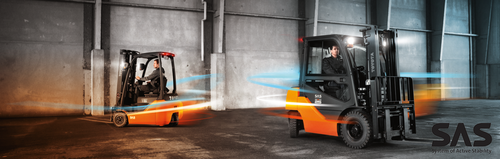
Toyota's System of Active Stability (SAS) is an intelligent forklift safety system designed to improve truck stability and reduce the risk of tip-overs during operation. By continuously monitoring key truck functions, SAS automatically supports safer travel, cornering and load handling, helping operators work more safely while maintaining productivity.
Exclusive to Toyota counterbalance forklifts and fitted as standard, SAS actively monitors key truck performance parameters to help reduce the risk of accidents before unsafe situations develop. This gives operators greater confidence when handling loads while supporting safe, efficient material handling throughout the working day.
- Quicker and safer goods storage and retrieval from racking
- More confident and efficient stacking and unloading of lorries
- Improved stability when cornering
- Greater comfort during long-distance transport
Mast Control Function
Provides a safe, stress-free, and quick way to store/retrieve goods from racking.
Fork Levelling
Guarantees safety and efficiency at the push of a button for stacking or (un)loading lorries.
Patented Swing Lock Cylinder
Ensures unmatched stability on 4-wheel Traigo and Tonero models when taking curves, without compromising productivity.
Steering Synchroniser
Reduces physical strain on drivers, offering comfort and safety during long-distance transport.
Toyota's System of Active Stability (SAS) is an advanced forklift safety technology that helps improve stability, enhance operator safety and support safer material handling operations.
Explore the key Toyota SAS features to learn how each function contributes to safer and more controlled forklift operation.
Pedestrian detection and collision avoidance with Toyota SEnS+
Reversing forklifts can create significant safety risks, particularly in busy warehouse environments where pedestrians and vehicles share the same space. Toyota SEnS+ is an intelligent pedestrian detection and collision avoidance system designed for Toyota counterbalance forklifts. Using a stereoscopic camera module, SEnS+ detects pedestrians and objects behind the truck, helping operators identify hazards when reversing and supporting safer material handling operations.
How does SEnS+ work?
- Detects pedestrians and obstacles while reversing
- Provides visual and audible alerts based on the level of risk
- Automatically reduces truck speed when a hazard is detected nearby
Manual Handling Solutions
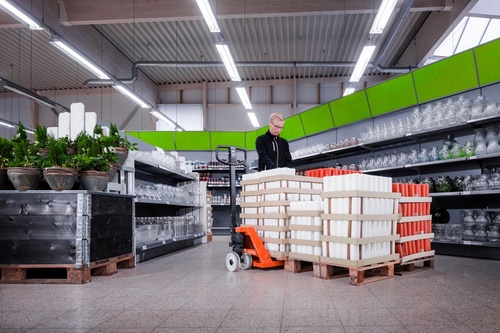
Manual handling equipment helps reduce the physical strain associated with lifting, moving and transporting loads, improving workplace safety and operator wellbeing. Toyota offers a range of manual handling solutions, from products to training, designed to minimise operator effort and support safer material handling across your operation.
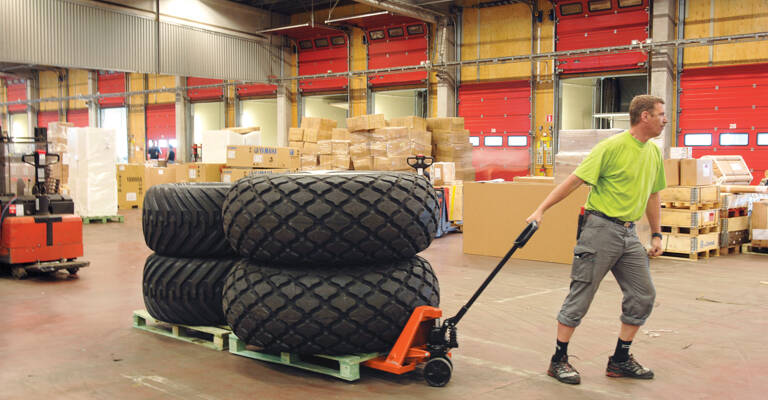
Reduce manual handling with the Toyota Pro Lifter
The Toyota Pro Lifter hand pallet truck requires up to 67% less starting force compared to standard lifters, significantly decreasing physical strain on operators' arms, shoulders, and backs.
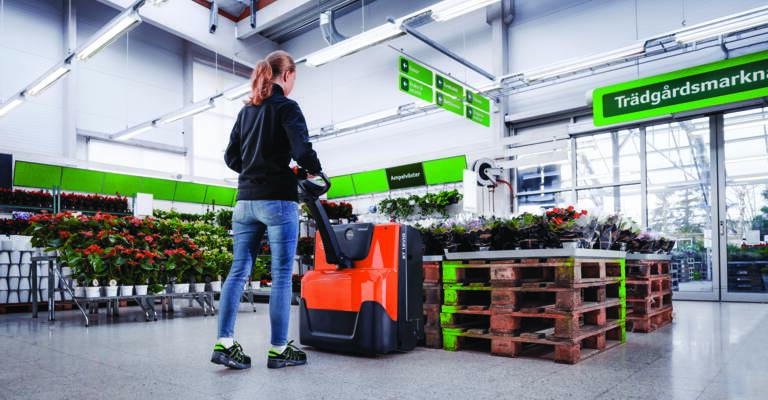
Power up your operation with Toyota powered pallet trucks
Improve productivity with Toyota’s powered pallet trucks. Our solutions are designed to help you with the heavy lifting, significantly reducing the strain on your workforce and enhancing safety.

Improve safety when moving roll cages
Toyota pedestrian tow tractors support ergonomics by requiring minimal effort when moving roll cages and trolleys. This ensures safe and controlled handling of goods.

4 hour course
Manual Handling
This course raises awareness and specific handling techniques in line with manual handling regulations.
Up to 12 candidates
Accredited Forklift Operator Training
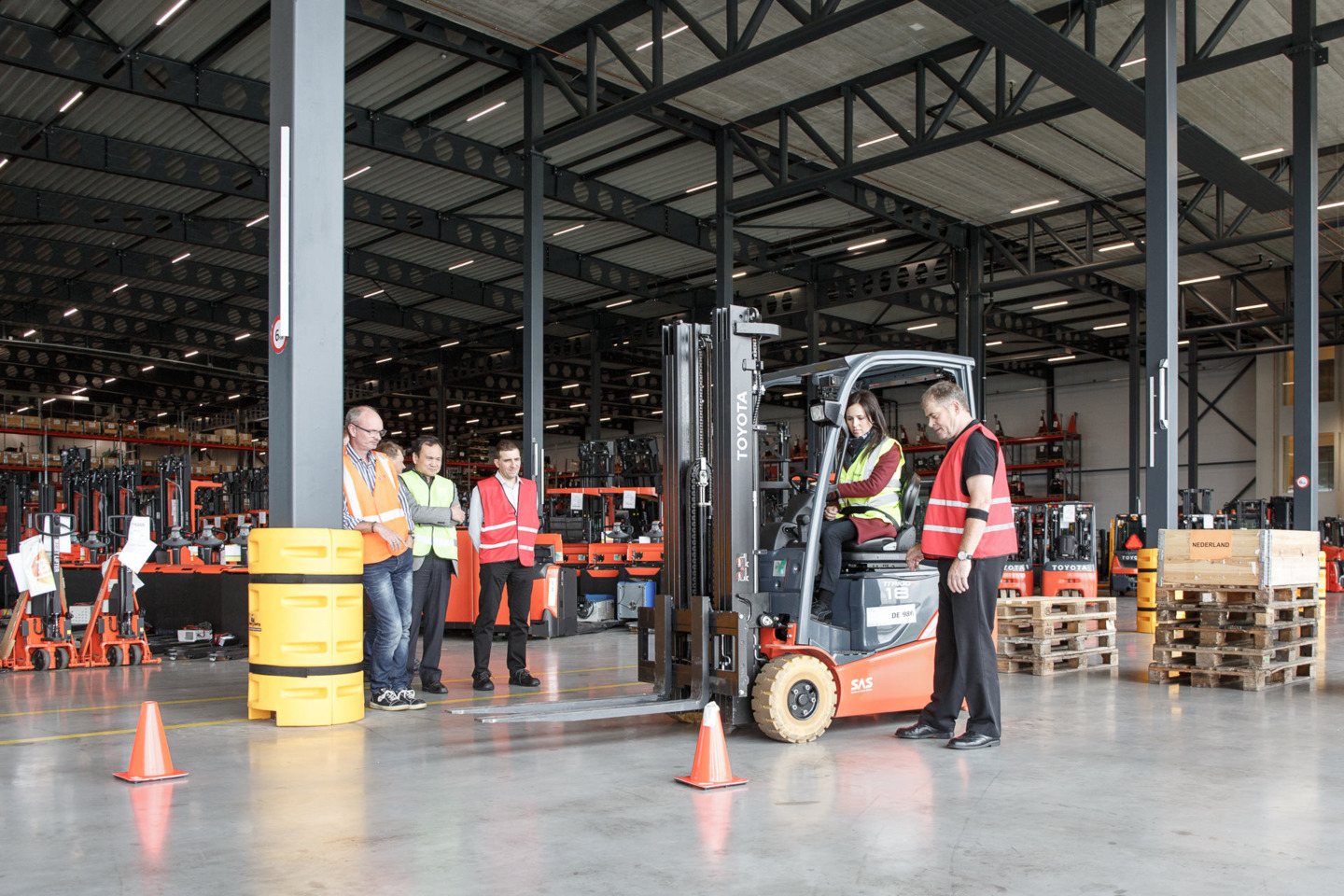
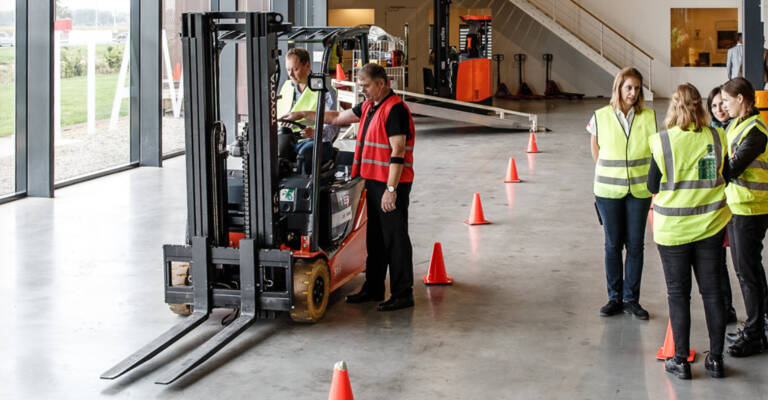
Forklift operator training plays a vital role in improving workplace safety by developing operator knowledge, confidence and safe working practices. With over 30 years of experience providing high-quality training solutions, we offer a comprehensive range of AITT-accredited courses designed to enhance safety, improve productivity and support operational efficiency.
Our training courses are available at our dedicated training facilities or on-site at your premises, helping businesses develop safer operators while meeting their specific operational requirements.
- Full range of product operator training, including forklift attachments. Our training courses are tailored for the level of experience of the delegates, ranging from novice to refreshers and conversions.
- Safety training for Managers & Supervisors responsible for managing operators & equipment.
- Pedestrian Awareness training available for pedestrians and operators when working in a busy workplace environment.
- Manual Handling training raises awareness and specific handling techniques in line with manual handling regulations.
0
Operators trained a year
0
Operator courses a year
0
Training hours per year
Risk and safety management with I_Site
Fleet management plays an important role in improving workplace safety by providing greater visibility into truck usage, impacts and operator behaviour. Toyota I_Site uses data from your connected trucks to help identify potential risks, improve operator accountability and support safer material handling operations.
Whether you operate a single forklift or manage a fleet across multiple sites, I_Site provides the insights needed to monitor performance, reduce operational risks and make informed decisions that improve both safety and productivity.
I_Site Benefits:
- Monitor and reduce forklift impacts
- Identify high-risk operators and behaviours
- Manage driver access and authorisations
- Use fleet data to improve operator safety
- Support safer driving through pre-operational checks
Forklift service and maintenance solutions
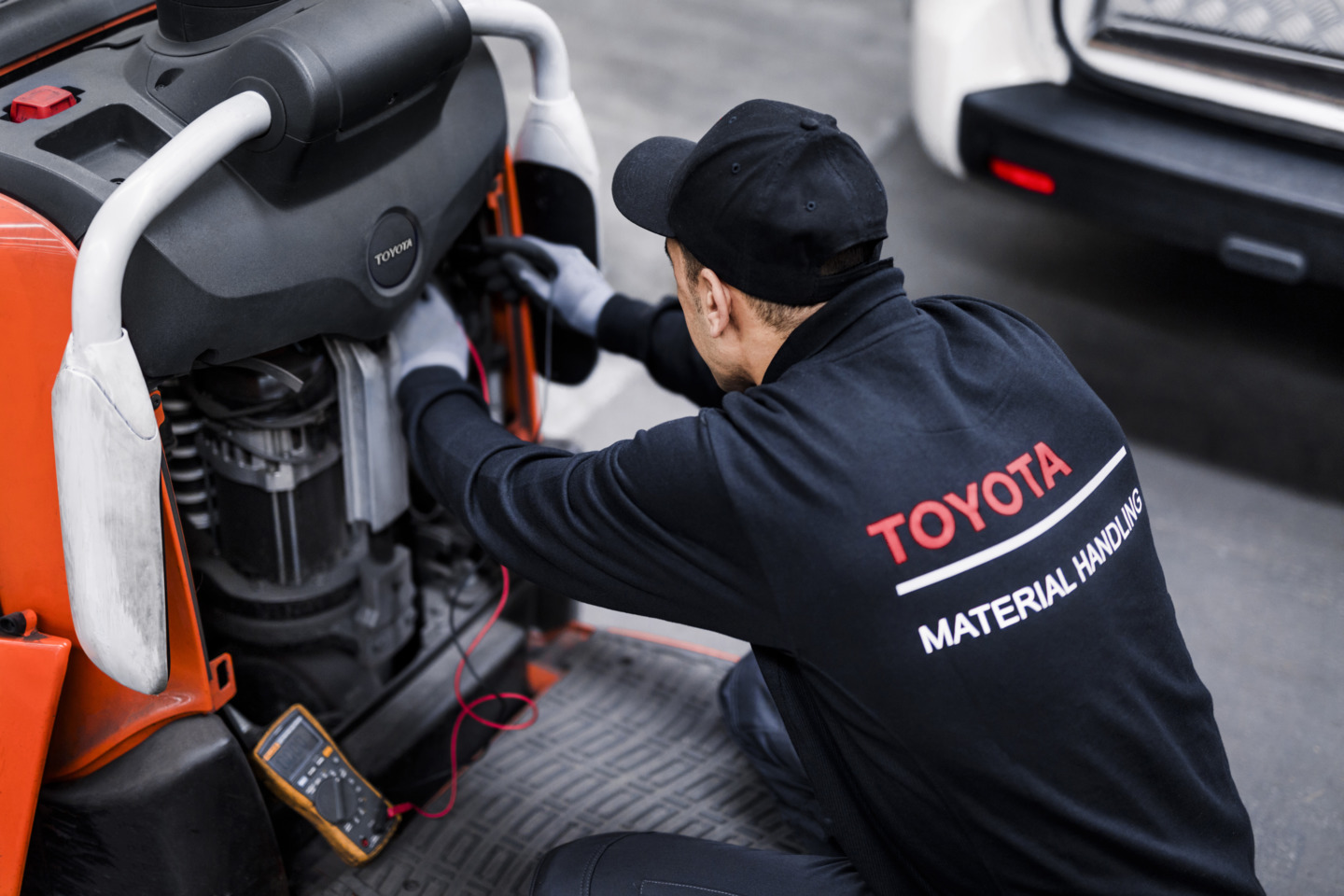
Regular forklift servicing and maintenance are essential for keeping your trucks safe, reliable and operating efficiently. Routine servicing and Thorough Examinations (LOLER) help identify potential issues before they become safety risks, reducing unplanned downtime while supporting safer material handling operations.
At Toyota we offer:
- Range of service packages for all makes of forklift truck
- CFTS certified Thorough Examinations
- Specialist Hand Pallet Truck service
Why choose Toyota for forklift service?
- Nationwide coverage
- 4 hour response time
- 24 hour parts delivery
- 95% first time fix rate
- NPS score of 66
Additional optional forklift safety features

Camera systems
Forklift camera systems improve operator visibility and awareness by providing a clear view of the load and surrounding environment through a colour LCD display. Designed to support safer material handling operations, they help reduce blind spots and improve confidence when manoeuvring.
Benefits:
- Improved visibility on the load
- Reduced risk of handling damage
- Increased awareness and safety when mobile
- All important information visible in one display screen
Warning lights
Blue LED front warning light
Shines a blue light when driving forward to warn those around the truck of its presence
Blue/Red LED warning lights
Available in both blue and red, these fully adjustable lights display a dot in front of the truck to allow operators greater awareness of truck movements and surroundings
Flashing warning lights
Placed overhead, this orange warning light flashes when the truck is started. Alerting nearby operators and pedestrians that the truck is active
Red safety zone lines
Two overhead guard mounted LED lights which project a beam of light indicating a truck operating zone where pedestrians should not be
Pictogram projector
Projected at the back of the truck when the truck is switched to the reverse position, a blue forklift pictogram with a red flashing outline is displayed
Red arc shape warning light
Projects a red light arc on the ground 3 metres behind the truck, allowing for a safer working environment
The right warning light can help improve visibility, increase awareness of truck movements and create a safer working environment for operators and pedestrians. Discover how each solution supports workplace safety.
Free Safety Resources
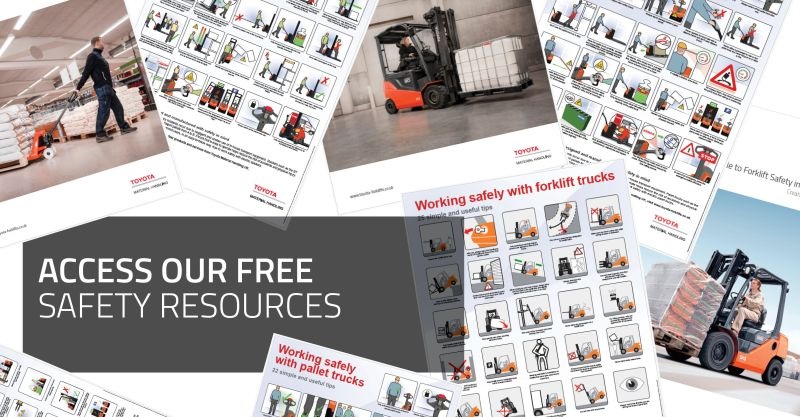
Access practical guides, downloadable resources and expert advice to help improve workplace safety, support operator awareness and promote best practice across your material handling operation.
Forklift Safety Solutions FAQs
Which forklift safety solutions are right for my operation?
The right forklift safety solutions depend on your operation, working environment and the risks you need to address. For example, stability systems help improve truck control, pedestrian detection systems reduce reversing risks, while operator training, fleet management and regular servicing all contribute to safer day-to-day operations. Assessing your operation helps identify the combination of solutions best suited to your business.
Can forklift safety systems be added to existing forklifts?
Many forklift safety features, including warning lights, camera systems and other accessories, can be fitted to existing forklifts. Some technologies, such as Toyota's System of Active Stability (SAS), are integrated into Toyota counterbalance forklifts. We can help identify which safety solutions are suitable for your existing fleet and operational requirements.
What are the most common causes of forklift accidents?
Common causes of forklift accidents include poor visibility, operator error, inadequate training, unsafe driving practices, interactions between forklifts and pedestrians, and poorly maintained equipment. Combining operator training, safety technology, regular servicing and clear workplace procedures can help reduce these risks and create a safer working environment.
How can I protect pedestrians in a warehouse?
Protecting pedestrians requires a combination of clear traffic management, operator training and appropriate safety technology. Pedestrian detection systems, warning lights, camera systems and designated walkways can all help improve visibility, reduce blind spots and minimise the risk of collisions in busy material handling environments.
Why is forklift operator training important?
Forklift operator training helps improve workplace safety by developing operator knowledge, confidence and safe working practices. Well-trained operators are better equipped to identify hazards, operate equipment safely and reduce the risk of accidents, equipment damage and operational downtime. Regular refresher training also helps reinforce best practice and maintain high safety standards.
How does fleet management technology improve workplace safety?
Fleet management technology provides greater visibility into truck usage, impacts and operator behaviour. By monitoring operational data, businesses can identify potential safety risks, improve operator accountability and make informed decisions that support safer, more efficient material handling operations.
Why is regular forklift servicing important?
Regular forklift servicing helps keep equipment safe, reliable and operating efficiently throughout its working life. Routine maintenance and Thorough Examinations (LOLER) help identify potential issues before they become safety risks, reducing unplanned downtime while supporting compliance and extending the lifespan of your forklift fleet.
Safety Solutions in Action
Discover how businesses are improving workplace safety with Toyota Safety Solutions. These customer success stories showcase how organisations have reduced risk, enhanced operator safety, and created safer working environments across their operations.
W. Stevenson and Sons
Operating in a busy harbour environment, W. Stevenson and Sons strengthened workplace safety with Toyota's I_Site fleet management system. The solution helps ensure only authorised operators can use trucks, improves compliance through digital safety checks, and provides real-time visibility of safety-related events, reducing risk across the operation.
Key safety benefits:
- Prevents unauthorised truck use
- Improves operator safety and accountability
- Mandatory digital pre-use safety checks
- Real-time alerts for unsafe behaviours
- Greater visibility of safety compliance
- Supports a stronger safety culture across the site
Danske Fragtmænd
Operating one of Denmark's busiest logistics hubs, Danske Fragtmænd improved workplace safety with Toyota's I_Site fleet management system. Across a fleet of 42 trucks, the business uses real-time monitoring, Smart Access, and impact detection technology to increase visibility of safety risks, prevent incidents, and encourage safer operator behaviour.
Key safety benefits:
- Prevents unauthorised truck use
- Reduces the risk of accidents
- Increases visibility of safety issues
- Promotes safer operator behaviour
- Supports safer truck operation
- Strengthens safety performance across the fleet
Dagrofa Logistik
By implementing Toyota's I_Site fleet management system across its operation, Dagrofa Logistik improved workplace safety, reduced equipment damage, and gained valuable insights into operator behaviour. The data-driven approach helped create a stronger safety culture while supporting injury prevention and continuous improvement.
Key safety benefits:
- Damage rate reduced from 14% to 3.18% between 2018 and 2021
- Only 2 workplace injuries recorded in 2021
- Impact detection helps identify and address safety risks
- Improved operator behaviour through data-driven monitoring
- Safer racking and equipment through better damage reporting
- Fleet data supports ongoing safety and performance improvements