
Improving efficiency in Food Manufacturing with Automation
From ambient food production to chilled and frozen environments, food manufacturers face increasing pressure to improve throughput, reduce costs and maintain product quality. Toyota Material Handling helps food manufacturers optimise material flow through intelligent warehouse automation solutions that increase efficiency, improve safety and support future growth.
Why food manufacturers are investing in warehouse automation
Food manufacturers are balancing rising operating costs, labour shortages, stricter food safety requirements and increasing consumer demand for faster, more reliable supply chains. At the same time, growing product ranges and seasonal fluctuations make warehouse operations more complex than ever.
Warehouse automation helps streamline repetitive material movements, improve inventory visibility and create more efficient operations while supporting compliance and product quality.
Common challenges in the food manufacturing industry
Labour shortages
Recruiting and retaining forklift operators continues to be a challenge, particularly for repetitive transport tasks and shift-based operations.

Increasing product variety
More product lines, packaging formats and shorter production runs require greater warehouse flexibility and storage capacity.
Food safety and traceability
Maintaining product integrity and ensuring accurate inventory tracking are essential for meeting regulatory and customer requirements.
Space limitations
Many food manufacturers are operating close to warehouse capacity and need to maximise every available square metre without expanding facilities.
Benefits of warehouse automation for food manufacturers
Explore how warehouse automation helps food manufacturers and distributors boost efficiency, improve material flow, enhance workplace safety, and build scalable operations ready for future demand.
Increased productivity
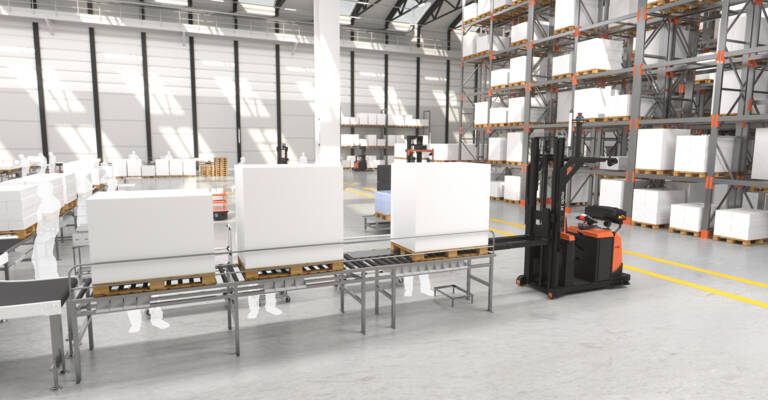
Automated vehicles operate consistently throughout the day, helping reduce bottlenecks and improve production flow.
Improve food safety and hygiene

Automation reduces manual handling and unnecessary product contact, helping minimise contamination risks and support good hygiene practices. This enables food manufacturers to maintain high food safety standards, protect product quality and support regulatory compliance.
Reduce operating costs
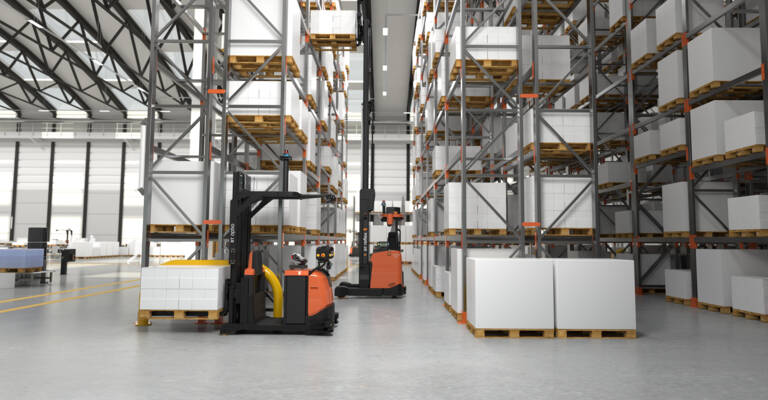
Automation helps reduce labour dependency, minimise damage and improve overall equipment utilisation.
Optimise warehouse space
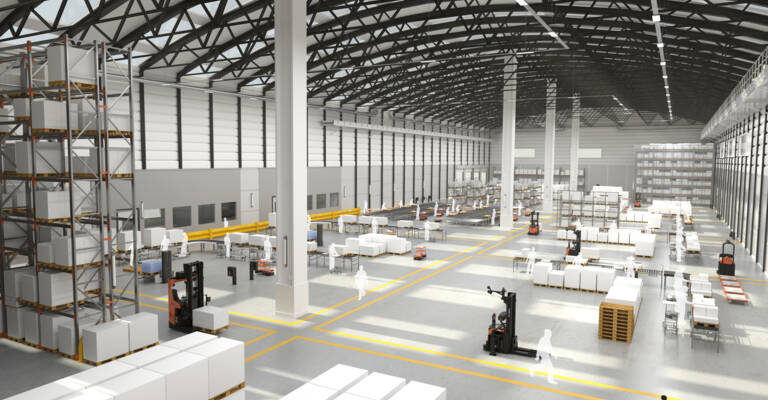
Automation enables more efficient warehouse layouts, supports higher density storage and improves material flow throughout the facility.
Improve operational flexibility
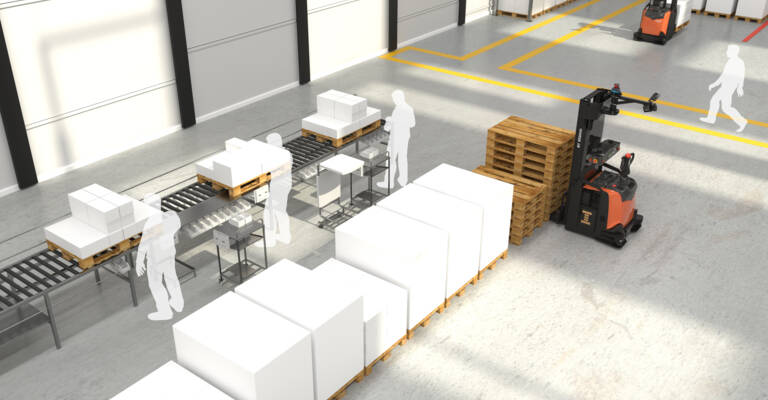
Automation systems can scale alongside production requirements, allowing manufacturers to respond to changing demand without major operational disruption.
Warehouse automation can support a wide range of food manufacturing processes, including:
- Production line replenishment
- Raw material transport
- Finished goods transport
- Goods-in pallet handling
- Put-away
- Empty pallet handling
- Cold store transport
- Warehouse-to-production movements
Which automation solution is right for your food manufacturing operation?
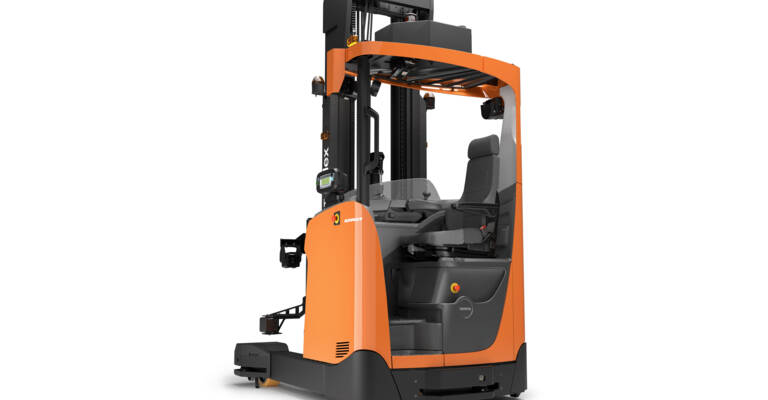
Automated Pallet Trucks, Stackers & Reach trucks
Designed to automate repetitive pallet handling, these AGVs allow for automated pallet transport, block stacking, mixed pallet handling and high-level storage.

Automated Counterbalance Trucks
A versatile AGV designed for multiple purposes across various operational flows including transportation and block stacking.
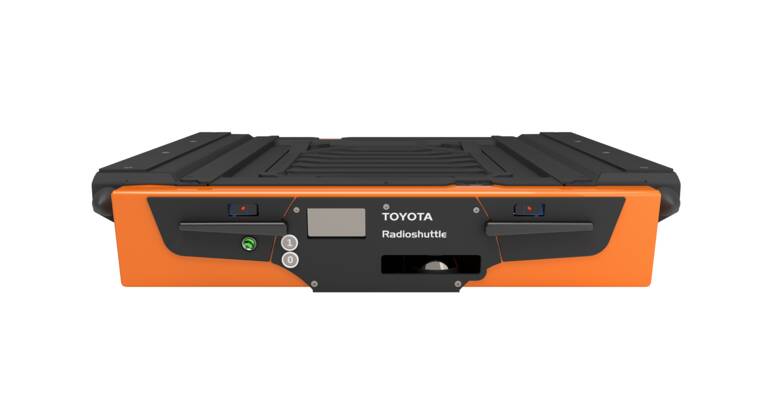
Semi-automated shuttle
High-density, deep storage solution with 80% space utilisation for increased throughput.
Your Trusted Automation Partner
0+
Installations
0+
Customer sites
0+
Years of automation experience
0+
Application, support & service engineers across Europe
Automation in food manufacturing customer success stories
Swarm automation transforms grocery fulfilment for Oda.
- 85% increase in efficiency in automated area
- 70% reduction in manual transport tasks
- 25% fewer routine movements, allowing operators to focus on higher value work
- 3,000 hours of staff capacity freed, equivalent to up to six full time employees annually
- Significant safety improvements by reducing human presence in high-traffic routes
Making the switch to automated forklifts brings a host of benefits to fresh fruit specialist, Primafruit
- Allowed teams to focus on more profitable and value-adding tasks
- The facility has become a more ‘serene’ working environment
- Consumes less energy
Chocolate manufacturer, Guylian creates a scalable warehouse for the future
- AGVs follow programmed routes with absolute consistency, avoiding damage to pallets and eliminating operational errors.
- Safer, cleaner, more predictable and more efficient than ever before
Warehouse Automation Resources & Insights

Automation Assessment
Identify automation opportunities and discover where warehouse automation could deliver the greatest business value.

Automation Blogs
Explore industry insights, automation trends and practical guidance on warehouse automation and material handling.

Automated Guided Vehicles (AGVs) Whitepaper
Explore whether automation is the right fit for your operation, and discover the benefits of Automated Guided Vehicles (AGVs)
Food Manufacturing Automation FAQs
Can warehouse automation work in existing food manufacturing facilities?
Yes. Many automation projects are introduced in phases, allowing manufacturers to automate selected processes while continuing normal production.
Can automated vehicles operate in chilled or frozen environments?
Yes. Automation solutions can be designed for ambient, chilled and cold storage environments depending on operational requirements.
Is warehouse automation suitable for smaller food manufacturers?
Yes. Many smaller food and beverage businesses can benefit from scalable automation solutions that improve efficiency, reduce manual handling and make better use of available space. Technologies such as automated guided vehicles (AGVs), automated pallet trucks and warehouse management software can be introduced gradually, allowing businesses to automate specific processes first and expand as their operation grows.
How quickly can warehouse automation deliver ROI?
The return on investment (ROI) from warehouse automation depends on factors such as your operation, labour costs, throughput and the type of automation implemented. Many businesses begin to see measurable benefits within 12 to 36 months through lower operating costs, increased productivity, reduced product damage and improved space utilisation. A warehouse assessment can help identify the areas where automation will deliver the greatest value and the fastest return.
Can automation improve traceability?
Yes. When integrated with warehouse management and fleet management systems, automation can improve inventory accuracy and provide greater visibility of material movements.
Ready to automate you food manufacturing operation?
Whether you're looking to improve safety, increase productivity or optimise material flow, our automation specialists can help identify where automation will deliver the greatest value.